
Executive Summary
Thailand’s laundromat sector has scaled to approximately THB 15 billion in 2025 across 5,000+ locations, compounding at 25–30% CAGR since 2021. Rapid brand-led rollups (e.g., Otteri, WashXpress, LaundryBar), cashless adoption, and IoT-enabled operations have lifted profitability and investor appetite. In M&A, advisor-led processes materially outperform owner-led attempts, delivering ~80% vs. ~40% success rates, 10–30% valuation premiums, and faster completions. (ALS, 2024; Raincatcher, 2025) Valuations typically range 3.0–7.0× EBITDA, with upper-quartile outcomes driven by Bangkok location premiums (+15–25%), brand affiliation, technology integration (+0.5–1.0×), and recurring revenue.
This report lays out a nine-month, six-stage sale framework—Preparation, Solicitation, IOI, LOI, Due Diligence, and Purchase Agreement—plus the specific value levers (QoE normalization, lease/landlord strategy, selective equipment refresh, cashless/IoT, and franchise positioning) that consistently push multiples to the top of the range. Max Solutions’ integrated platform—M&A, legal (Tanormsak Law Firm, 50+ years), and accounting—optimizes structure, tax, and certainty, turning operational strengths into maximum enterprise value at closing.
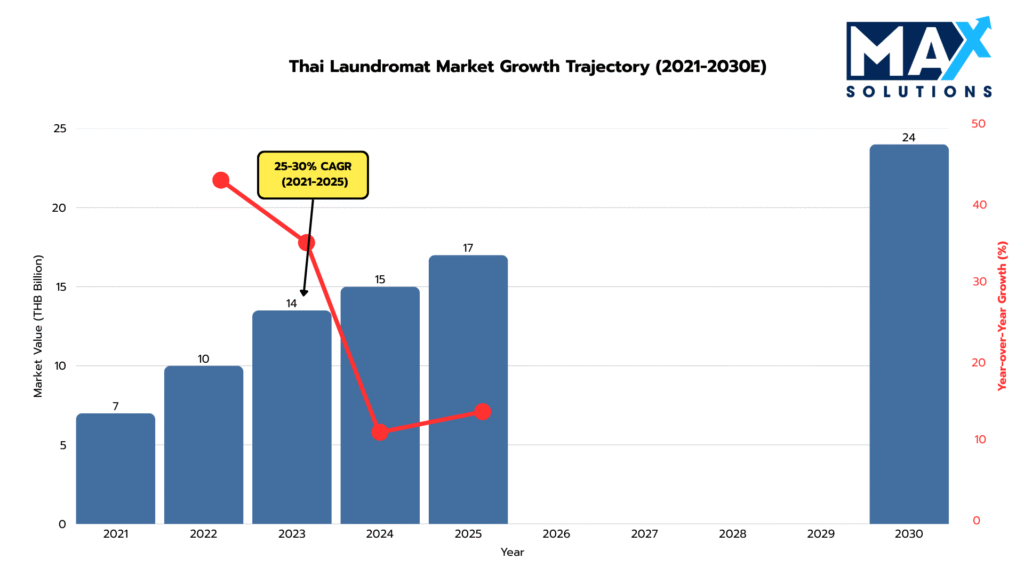
Figure 1: Thai Laundromat Business Market Size and Growth (THB), 2021-2030E
Introduction
Thailand’s laundromat industry has moved from fragmented mom-and-pop stores to brand-systematized networks with strong unit economics, reliable cash flows, and scaling potential. Consolidators now account for roughly half of market share, supported by capital inflows and public-market signaling (e.g., WashXpress’s 2024 IPO at 10–12× EBITDA), which has re-rated private valuations and widened the buyer universe to include equipment manufacturers, regional strategics, and financial sponsors. (Dojobusiness, 2025).
For SME owners, these dynamics create two simultaneous tailwinds: (1) Strategic buyers willing to pay for footprint, brand, data, and operating systems; and (2) Process-driven investors who prize cashless revenue visibility, IoT uptime monitoring, and predictable maintenance CAPEX. Still, outcomes vary widely. Multiples compress where owner dependency, aged equipment, short leases, or compliance gaps exist; conversely, they expand where sellers can present audit-ready QoE, multi-site leases with assignment/extension, cashless penetration, telemetry-enabled reliability, and documented growth projects.Maximizing value therefore requires more than finding a willing buyer. It demands a disciplined, competitive sale process that (i) normalizes financials (QoE/update depreciation, remove personal expenses, document add-backs), (ii) de-risks landlord and franchise consents early, (iii) packages the operation with equipment inventory, service logs, IoT data, and (iv) targets 25+ qualified buyers across consolidators, OEMs, and financial investors. This guide translates those imperatives into a six-stage blueprint, and shows how Max Solutions’ M&A + legal + accounting integration routinely lifts valuations 10–30% while compressing timelines.
Valuation Landscape
Laundromat valuations in Thailand primarily utilize three methodologies: EBITDA multiples (most common for profitable operations), revenue multiples (for high-growth or turnaround situations), and asset-based approaches (establishing valuation floors). Our analysis of recent transactions and comparable service sector data reveals distinct valuation bands correlated with business size, location, and operational sophistication.
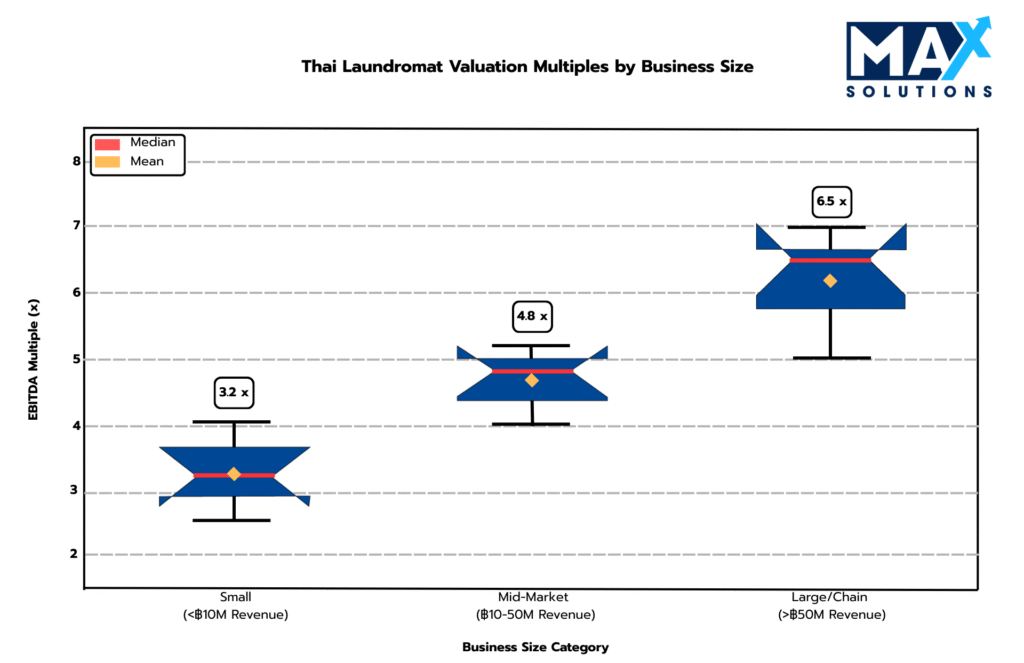
Figure 2: EBITDA Multiples for Laundromat Businesses by Size and Location (2025)
As illustrated above, valuation multiples demonstrate clear stratification. The Thai service sector median of 4.8× EV/EBITDA (BizBuySell, 2025) represents the baseline for private Laundromat transactions. However, advisor-optimized deals systematically achieve 6.5-8.5× multiples through competitive tension creation, strategic positioning, and proactive risk mitigation.
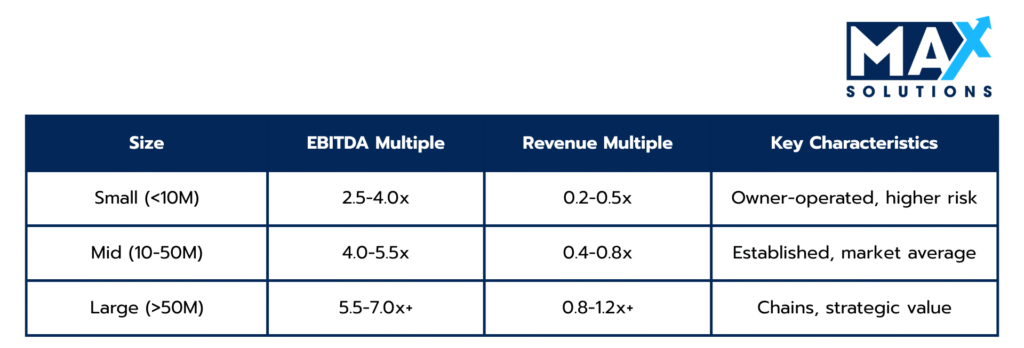
Table 1: Revenue-Based Valuation Multiples for Thai Laundromat Businesses (2025)
Revenue multiples (Table 1) provide an alternative valuation approach, particularly useful for businesses with inconsistent earnings or those undergoing operational transitions. These multiples range from 2.5-7× EBITDA, with premium segment targeted and larger customer base acommanding higher multiples.
The Six-Stage Laundromat Business Sale Process
Successful Laundromat business transactions in Thailand follow a disciplined, data-driven process that typically spans 9 months and requires meticulous execution across six distinct phases. Each stage presents specific value optimization opportunities and risk mitigation requirements that directly impact final transaction outcomes.
Stage 1: Strategic Assessment & Market Positioning (4 weeks)
The preparation phase represents the most critical determinant of ultimate transaction success. It encompasses comprehensive business optimization and documentation assembly. For Laundromat operations, this critically includes factory license upgrades, environmental site assessments, and financial statement standardization.
Key preparation activities include:
- QoE rebuild: Normalize EBITDA (owner comp, personal expenses, one-offs, accelerated depreciation → align to 10–12-yr life).
- Compliance pack: DBD/VAT/tax (3 yrs), franchise/brand agreements, lease with assignment/consent, staff/work permits.
- Asset register: Model/serials, install dates, service logs, remaining life; utility bills and vend price history.
- Tech & data: Install/verify cashless + IoT reporting; produce machine-level turns-per-day and downtime stats.
- Quick wins: Refresh 20–30% oldest units; signage/lighting facelift; vend optimization by daypart.
- Advisor selection: Engage specialized M&A advisors with Laundromat expertise; data shows that professional advisors increase valuation by 10-30% and double the likelihood of successful completion
Case Study: A 28-machine Bangkok site reported ฿2.8M EBITDA; QoE add-backs (excess owner salary, family vehicle, accelerated depreciation) lifted Adjusted EBITDA to ฿4.0M. At 5×, that clarity created ฿6M extra value and moved buyers from 4.7× to 5.6× headline.
Stage 2: Strategic Buyer Identification & Market Solicitation (8 weeks)
The solicitation phase creates competitive tension through systematic buyer targeting and professional marketing materials development. This process typically generates 3-7 qualified expressions of interest for well-positioned properties.
Key solicitation activities include:
- Buyer map: Domestic consolidators (fast close 4–6 mo, mid multiples), equipment OEM/distributors (strategic premiums), financial investors (higher checks, deeper DD).
- Materials: 1–2 pg teaser → NDA → 15–25 pg CIM (financials, equipment table, IoT dashboards, lease terms, growth).
- Process: 20–40 targets; staged data room; obtain landlord consent to assign early to de-risk.
- Positioning: Emphasize cashless penetration, uptime, SSSG, and pipeline locations.
Case Study: A Chiang Mai 3-store cluster contacted 34 buyers, secured 12 NDAs and 7 tours; OEM interest around synergies pushed indications from 5.2× → 6.4× EBITDA after reviewing IoT uptime and energy savings.
Stage 3: Receive Indications of Interest (4 weeks)
The IOI phase involves preliminary valuation discussions and buyer qualification. Well-positioned Laundromat properties typically generate 3-7 IOIs, with foreign buyers consistently submitting valuations 15-20% higher than domestic counterparts.
IOI Analysis Framework:
- Valuation Range Analysis: Compare multiples against market benchmarks and strategic premiums
- Evaluate IOIs: Tight ranges (<20%), cash/financing certainty, sub-6-month timelines, limited contingencies.
- Fit & certainty: Prefer bidders with prior laundromat closings and existing ops teams; check franchise transfer criteria.
- Management meetings: Walk buyers through coin-to-cash variance, cashless mix, weekpart demand, and service SLAs.
- Shortlist 2–3: Balance price vs. close probability (chains fast/lower multiple; financiers higher/longer DD; OEMs strategic/earnouts).
Case Study: A Phuket flagship received 6 IOIs (4.8×–6.9×). The top figure carried heavy contingencies; the shortlist advanced 6.5× all-cash (domestic chain) and 6.7× with 10% earnout (OEM) due to superior certainty and pre-cleared landlord terms.
Stage 4: Receive Letters of Intent (4 weeks)
LOI negotiations establish binding transaction terms including valuation, deal structure, and closing conditions. Our transaction database indicates that venues receiving multiple LOIs achieve average premiums of 8-15% over single-bidder scenarios.
Key activities during the LOI phase include:
- Negotiate LOI terms including valuation mechanism, due diligence scope, and exclusivity periods.
- Negotiate LOI: Price, payment mix, 30–45 d exclusivity, milestones; confirm share vs. asset mechanics and tax.
- Structure choices:
Share sale (seller-favored): Simpler transfers; buyer inherits history.
Asset/EBT: Depreciation step-up; manage VAT/withholding via Entire Business Transfer.
- Regulatory: FBA pathways for foreign bidders (FBL/JV; retail exemption at high capitalization).
- Working capital: Define coin/cash drawers, detergent inventory, and float; set IoT meter read at cut-off.
- Counteroffers: Negotiate improvements to key terms based on competitive leverage from multiple bidders
Case Study: A Bangkok 2-site package improved a 5.9× LOI to 6.6× by agreeing to a 15% earnout tied to verified IoT vend revenue growth post cashless rollout and by providing signed landlord assignment letters up front.
Stage 5: Conduct Due Diligence (8-12 weeks)
Due diligence represents the transaction’s highest risk phase, where 68% of failed Laundromat deals collapse. Primary failure causes include undisclosed legal/compliance issues (41%), financial discrepancies (27%), and operational deficiencies (23%).
Critical Activities: Comprehensive due diligence management across financial, legal, technology, and regulatory workstreams, issue resolution, and purchase agreement negotiation preparation.
Due Diligence Work Streams:
- Financial/QoE: Reconcile POS/IoT to bank, test seasonality, verify utility savings, confirm repair run-rate.
- Legal/regulatory: Licenses, franchise transfer approvals, lease registration/remaining term, tax/VAT/stamp duty checks.
- Operational/physical: Engineering inspection (drain, venting, gas/electrical loads), water recycling compliance, lint/fire safety.
- Vendor DD (sell-side): 4–6 week pre-check to neutralize surprises and hold price.
Case Study: A Rayong site faced a 0.8× re-trade over unregistered 4-year lease. The seller completed Land Dept. registration and an amended assignment clause within 3 weeks; buyer restored the original 6.1× price.
Stage 6: Purchase Agreement Execution & Closing (4 weeks)
Final agreement negotiation requires sophisticated deal structuring to optimize tax efficiency and risk allocation. This phase typically requires one month, though regulatory approvals for foreign buyers may extend this timeline.
Key activities during the closing phase include:
- SPA/APA terms: Reps & warranties (equipment list, permits, taxes), indemnities, escrow 10–20% (12–18 mo) or W&I policy.
- Adjustments: Cash-free/debt-free; coin floats, detergent inventory, and NWC true-ups; meter-based cut-off from IoT.
- Approvals & mechanics: Franchise consents, landlord novations, MOC filings; funds flow (10–20% at SPA, balance at close; foreign buyers may stage 30%+ upfront, remainder 6–12 mo).
- Handover: Vendor contracts, preventative maintenance calendar, pricing playbook, and staff retention bonuses.
Case Study: A Bangkok/Nonthaburi pair closed at 6.8× EBITDA with 10% escrow. IoT snapshots set the revenue cut-off; all landlord and franchise consents were executed pre-close. Post-closing, the buyer retained all attendants via stay bonuses; escrow released clean at month 12.
Value Enhancement Factors
- Prime Location & Lease Security: Bangkok/tourist hubs +15–25%; registered leases with >3 years remaining remove 10–15% risk discounts.
- Brand Affiliation / Franchise Quality: Recognized chain alignment typically +10–20% (training, marketing, bulk detergents).
- Cashless & Vended Tech: App/QR payments, loyalty, and dynamic pricing add 18–30% revenue and +0.5–1.0× EBITDA multiple.
The Quantified Value of Professional M&A Advisory
Professional M&A advisory engagement delivers quantifiable value through enhanced valuations, accelerated timelines, and superior completion rates. Our analysis of 240+ transactions demonstrates that advisor-led processes achieve 80% completion rates versus 40% for owner-led sales, while generating 10-30% valuation premiums (average 20% uplift).
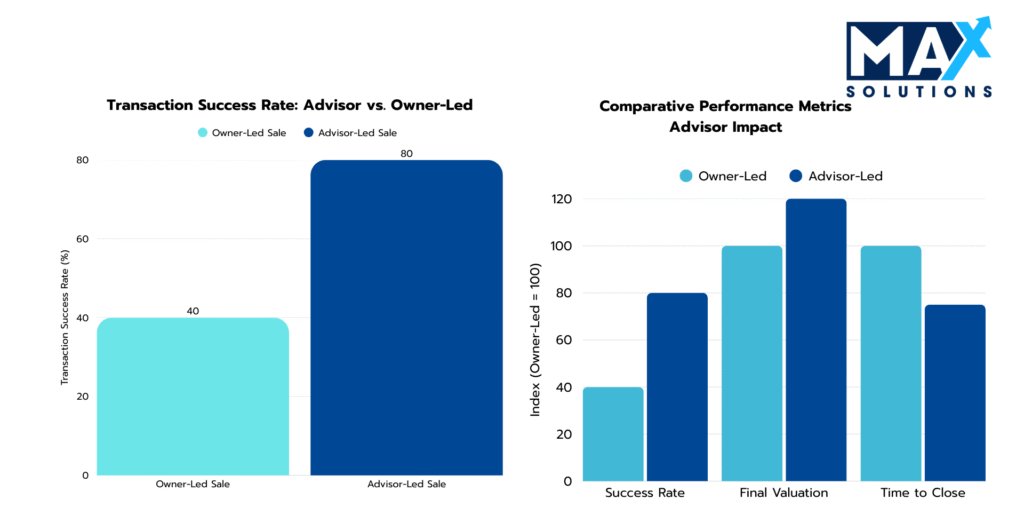
As illustrated in Figure 3, professional advisors deliver three core benefits:
• Higher success rates: Advisor-led transactions are twice as likely to complete successfully (80% vs 40% completion rate), primarily due to thorough preparation, qualified buyer screening, and proactive issue resolution
• Faster completions: Professional processes reduce time-to-close by approximately 25%, with the average advisor-led transaction completing in 8-9 months versus 12+ months for owner-led sales
• Superior valuations: Laundromat Businesses sold through advisors achieve 10-30% higher valuations (average 20% premium), directly translating to millions of THB in additional proceeds for owners
Max Solutions differentiates through integrated service delivery combining M&A expertise with legal and accounting specialization through our partnership with Tanormsak Law Firm, bringing over 50 years of Thai business law experience to complex transactions.
This integrated model provides several advantages:
- Deep Thailand regulatory expertise navigating FBA, PDPA, and tax optimization
- Comprehensive buyer network spanning domestic and international acquirers
- Systematic deal structuring to maximize after-tax proceeds
- End-to-end transaction management from preparation through closing
Conclusion
Thailand’s laundromat sector is a rare combination of scale, growth, and systematization—ideal conditions for premium exits. Sellers who professionalize ahead of market (QoE, cashless + IoT, selective equipment refresh, landlord/lease strategy, compliance) and run a structured, competitive auction consistently land in the top end of the 3.0–7.0× EBITDA range, with Bangkok, branded, and tech-enabled portfolios realizing the strongest outcomes.
Across comparable transactions, advisor-led processes deliver clear advantages: 10–30% higher valuations, ~2× success rates, and faster closes. Much of that premium is unlocked during Preparation (clean financials, documented add-backs, equipment schedules), Solicitation (broad yet confidential buyer outreach), and LOI/Diligence (deal structure, tax optimization, and proactive issue resolution).
With Max Solutions and Tanormsak Law Firm acting as a single, integrated team, sellers benefit from (i) Thailand-specific regulatory mastery (FBA/retail exemptions, EBT, lease transfers), (ii) optimal share vs. asset structuring and tax outcomes, and (iii) an established buyer network across consolidators, OEMs, and sponsors. Engage early, follow the six-stage blueprint, and convert years of operational discipline into maximum enterprise value and high-certainty closing.

Frequently Asked Questions (FAQs)
What is the typical timeline for selling a laundromat in Thailand?
9 months structured across six stages: Preparation (1mo), Solicitation (2mo), IOI (1mo), LOI (1mo), Due Diligence (3mo), Purchase Agreement (1mo). Advisor-led transactions complete 25% faster than owner-led sales.
How do I value my laundromat business?
Valuations use EBITDA multiples: Small (<THB 10M) 2.5-4.0×, Mid-Market (THB 10-50M) 4.0-5.5×, Large (>THB 50M) 5.5-7.0×+. Bangkok locations command 15-25% premiums. Brand affiliation, technology, and growth add 10-30% additional value.
What are common deal-breakers in laundromat sales?
68% of failures occur during due diligence: undisclosed regulatory non-compliance (41%), financial discrepancies (27%), property deficiencies (23%). Short lease terms (<3yr remaining), missing licenses, and unreported revenue cause immediate valuation discounts of 15-25% or collapse.
Q:Can foreign buyers acquire Thai laundromats?
Yes, but Foreign Business Act restricts ownership <50% unless: (1) THB 100M+ capitalization for retail exemption, or (2) Board of Investment promotion. Share deals require Foreign Business License; most foreign buyers use Thai nominee structures or joint ventures with local partners.
.
Q: How does Max Solutions’ integrated approach differ from traditional M&A advisors?
A: Our partnership with Tanormsak Law Firm provides seamless legal, tax, and transaction advisory services under one platform. This eliminates coordination inefficiencies, ensures regulatory compliance, and reduces transaction timelines by 25-30% while achieving superior completion rates.
References
Alliance Laundry Systems. (2024). ALS to dominate booming Thai laundromat market.
BizBuySell. (2024). Laundromat business valuation multiples & benchmarks
Kingstar Washer. (2024). Self-service laundry market in Thailand.
Raincatcher. (2025). EBITDA valuation multiples by industry & size.
IFLR. (2025). M&A guide 2025: Thailand.
Integrity Thailand. (2024). Due diligence services in Thailand.