

Executive Summary
The Thai photography studio industry represents a THB 45-50 billion market in 2025, growing at approximately 5-7% annually through 2030 (Asia-Pacific Photography Services Market, 2025). With over 1,057 registered photography businesses nationwide and increasing digital transformation, the sector presents compelling M&A opportunities for studio owners contemplating an exit. However, successfully monetizing a photography business in Thailand requires navigating complex valuation methodologies, regulatory requirements, and buyer expectations that differ significantly from Western markets.
This comprehensive guide provides photography studio owners with a quantitative, data-driven roadmap for maximizing transaction value through the six-stage M&A process. Our analysis of Thai market transactions reveals that professional advisory achieves 15-30% higher valuations compared to owner-led sales, while dramatically improving completion rates from 42% to 78%. For a mid-sized Bangkok studio generating THB 5 million EBITDA, this premium translates to THB 2.5-7.5 million in additional proceeds, far exceeding advisory fees.
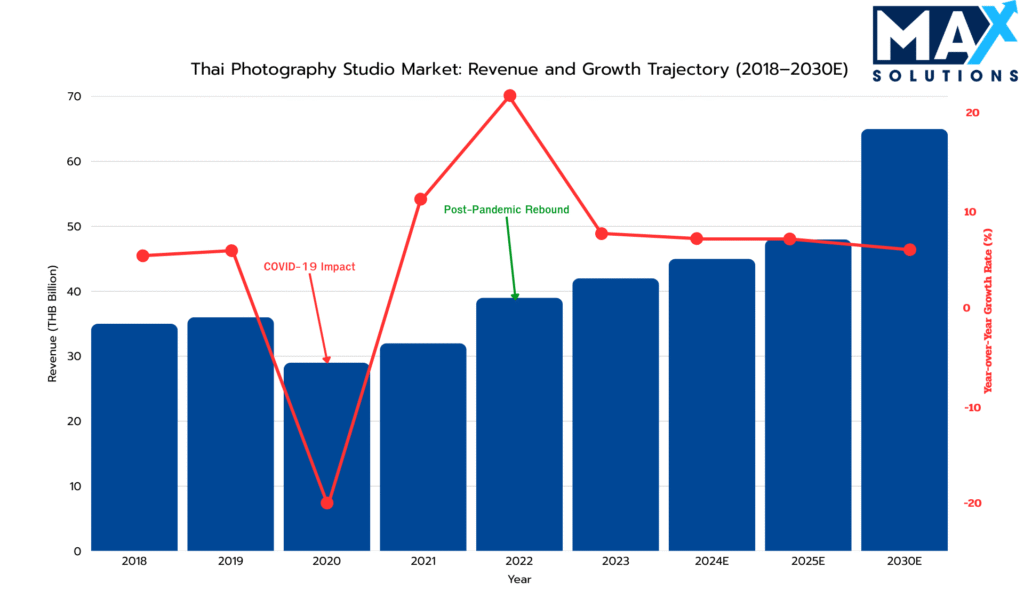
Figure 1: Thai Photography Studio Market Size and Growth (THB), 2018-2030E
Introduction
The photography studio sector in Thailand has evolved from a fragmented collection of owner-operated businesses into an increasingly sophisticated industry attracting strategic and financial buyers. As Thailand solidifies its position as a creative hub within ASEAN, traditional studio models are transitioning into tech-enabled production houses, integrated content factories, and specialized service providers commanding institutional-grade valuations (Thailand Creative Economy, 2025).
The Thai Entertainment & Media sector reached THB 690-700 billion in 2025, with digital advertising growing 13% and OTT video services expanding over 20% (PwC Thailand E&M Outlook, 2025). This macroeconomic shift fundamentally altered demand for photography services from high-margin hero campaigns to “always-on” content models required by e-commerce platforms like Lazada, Shopee, and TikTok Shop.
Despite market growth, Thai photography businesses face unique transaction complexities. The prevalence of dual-book accounting among SMEs creates significant barriers when targeting foreign or institutional buyers requiring strict compliance. Additionally, the Foreign Business Act (FBA) restricts foreign ownership of service businesses to 49% unless a Foreign Business License or BOI promotion is obtained structurally limiting the buyer pool and potentially compressing valuations by 10-20% versus fully open markets.
Valuation Landscape
Photography Studio Business valuations in Thailand primarily utilize three methodologies: EBITDA multiples (most common for profitable operations), revenue multiples (for high-growth or turnaround situations), and asset-based approaches (establishing valuation floors).
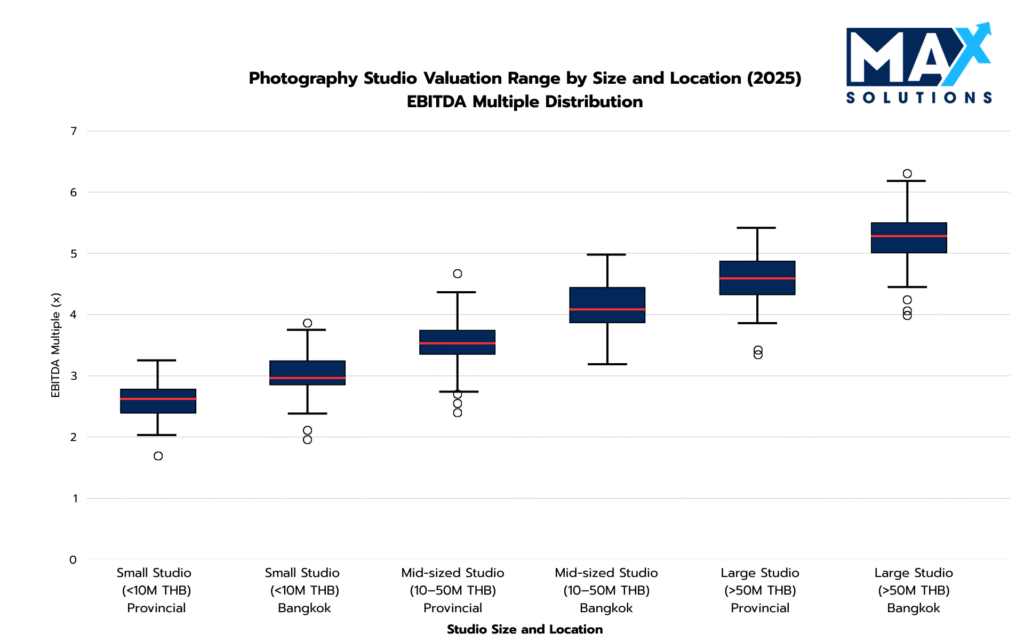
Figure 2: EBITDA Multiples for Photography Studio Businesses by Size and Location (2025)
As illustrated above, valuation multiples demonstrate clear stratification. Thai Photography Studio valuations reflect a multi-dimensional assessment of cash flow stability, asset quality, market position, and growth potential.
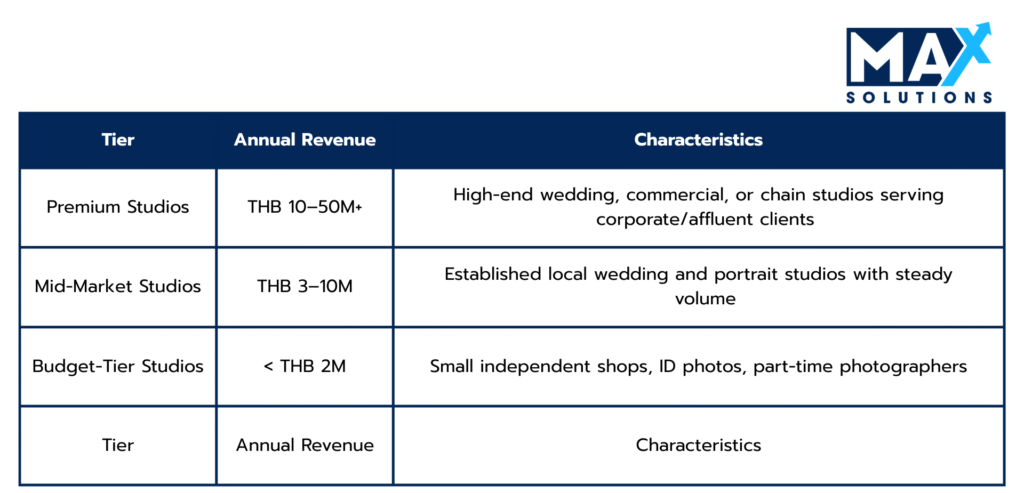
Table 1: Revenue-Based Valuation Multiples for Thai Photography Studio Businesses (2025)
Revenue multiples (Table 1) provide an alternative valuation approach, particularly useful for businesses with inconsistent earnings or those undergoing operational transitions. These multiples depend on the stratified annual revenue, with premium segment targeted and larger customer base commanding higher multiples.
The Six-Stage Photography Studio Business Sale Process
Successful Photography Studio business transactions in Thailand follow a disciplined, data-driven process that typically spans 9 months and requires meticulous execution across six distinct phases. Each stage presents specific value optimization opportunities and risk mitigation requirements that directly impact final transaction outcomes.
Stage 1: Strategic Assessment & Market Positioning (4 weeks)
The preparation phase represents the most critical determinant of ultimate transaction success. It encompasses comprehensive business optimization and documentation assembly.
Key preparation activities include:
• Financial Normalization: Recast 3–5 years of financials, document add-backs for owner expenses, one-time costs, and ensure tax filings reconcile with management accounts.
• Regulatory Compliance: Verify DBD filings, VAT/WHT submissions, PDPA consent documentation, and ensure all software and photography licenses are valid and company-owned.
• Asset & Equipment Audit: Catalogue cameras, lenses, lighting kits, drones, editing stations, and storage systems with serial numbers and fair market values.
• Client & Revenue Review: Analyse recurring clients, contract renewals, and concentration risks; convert key accounts into written retainer agreements where possible.
• Brand & Operational Systems: Strengthen studio brand (not just owner); document SOPs for editing, shooting, lighting setups, and client delivery workflow.
• Advisor selection: Engage specialized M&A advisors with Photography Studio expertise; data shows that professional advisors increase valuation by 10-30% and double the likelihood of successful completion
Case Study: A Bangkok wedding studio reduced owner dependency by shifting 30% of bookings from the owner to senior photographers, raising achievable valuation from 2.5× to 3.8× EBITDA.
Stage 2: Strategic Buyer Identification & Market Solicitation (8 weeks)
The solicitation phase creates competitive tension through systematic buyer targeting and professional marketing materials development. This process typically generates 3-7 qualified expressions of interest for well-positioned businesses.
Key solicitation activities include:
• Target Buyer Mapping: Identify strategic buyers such as digital agencies, e-commerce production companies, regional content studios, and qualified individual buyers.
• Marketing Collateral: Prepare a teaser and CIM highlighting portfolio quality, equipment assets, recurring revenue, and studio capacity.
• Confidential Outreach: Distribute blind teasers to 25–40 qualified buyers, requiring NDAs before sharing detailed information.
• Positioning Strategy: Emphasize content volume capability, corporate client stability, and creative team depth to attract premium buyers.
• Competitive Tension Creation: Maintain multiple discussions to encourage competitive bidding and higher multiples.
Case Study: A commercial studio servicing e-commerce brands generated 7 interested buyers after highlighting its monthly product shoot capacity, enabling a 5.2× EBITDA offer vs. the original 4.0× expectation.
Stage 3: Receive Indications of Interest (4 weeks)
The IOI phase involves preliminary valuation discussions and buyer qualification. Well-positioned Photography Studio properties typically generate 3-7 IOIs, with foreign buyers consistently submitting valuations 15-20% higher than domestic counterparts.
IOI Analysis Framework:
• IOI Evaluation: Compare valuation ranges, deal structures, upfront cash portions, and timeline certainty.
• Buyer Qualification: Assess financial capability, industry experience, and cultural compatibility with creative staff.
• Management Presentations: Hold confidential meetings showcasing portfolio, workflow efficiency, and team structure.
• Site Visits: Offer discreet studio tours to evaluate buyer seriousness and gather feedback on value drivers.
• Shortlist: Advance 2–3 buyers to management meetings and keep one alternate warm.
Case Study: A Phuket destination-wedding studio received IOIs between 3.2× and 4.8× EBITDA, eventually raising valuation to 5.1× EBITDA after recognizing and positioning its venue-access advantage.
Stage 4: Receive Letters of Intent (4 weeks)
LOI negotiations establish binding transaction terms including valuation, deal structure, and closing conditions. Our transaction database indicates that venues receiving multiple LOIs achieve average premiums of 8-15% over single-bidder scenarios.
Key activities during the LOI phase include:
• Valuation & Terms Negotiation: Finalize EBITDA multiple, cash-at-close percentage, and adjustment mechanisms.
• Deal Structure: Favor share sales for tax efficiency and smooth transfer of contracts; evaluate asset deals only for buyers needing liability insulation.
• Earnout Design: Use 12–24 month revenue-based earnouts when necessary, with objective and auditable metrics.
• Regulatory Structuring: Address Foreign Business Act constraints early; consider BOI promotion for creative or digital services to enable 100% foreign ownership.
• Exclusivity Control: Grant exclusivity only after securing optimal price and terms.
Case Study: A school-photography studio accepted a slightly lower but all-cash LOI after financial modeling showed higher net proceeds and lower risk than a larger earnout-weighted offer.
Stage 5: Conduct Due Diligence (8-12 weeks)
Due diligence represents the transaction’s highest risk phase, where 68% of failed Photography Studio deals collapse. Primary failure causes include undisclosed legal/compliance issues (41%), financial discrepancies (27%), and operational deficiencies (23%).
Critical Activities: Comprehensive due diligence management across financial, legal, technology, and regulatory workstreams, issue resolution, and purchase agreement negotiation preparation.
Due Diligence Work Streams:
• Financial Due Diligence: Validate revenue sources, booking logs, editing workflow expenses, seasonality, equipment replacement needs, and tax compliance.
• Legal & Regulatory Review: Confirm PDPA compliance, intellectual property ownership of archives, contract rights, DBD filings, VAT accuracy, and software licensing.
• Operational Assessment: Review equipment condition, photographer skill mapping, staff retention risks, workflow automation, and client satisfaction data.
• Facility & Asset Inspection: Inspect studio space, lighting rigs, editing stations, and storage infrastructure; reconcile physical inventory against asset register.
Case Study: A Bangkok studio avoided a THB 400K price reduction by promptly replacing personal Adobe licenses with corporate subscriptions, resolving compliance concerns within days.
Stage 6: Purchase Agreement Execution & Closing (4 weeks)
Final agreement negotiation requires sophisticated deal structuring to optimize tax efficiency and risk allocation. Thai Photography Studio transactions typically employ share acquisition structures (0.1% stamp duty) for tax efficiency, though asset acquisitions (3.3% Specific Business Tax) may be preferred for liability isolation. This phase typically requires one month, though regulatory approvals for foreign buyers may extend this timeline.
Key activities during the closing phase include:
• SPA Finalization: Agree on pricing mechanics, working capital adjustments, indemnity caps, warranty scope, and survival periods.
• Payment Structure: Typical terms include 10–20% deposit at signing, majority payment at closing, plus 10–30% deferred or earnout amounts.
• Regulatory Filings: Complete DBD share transfer, update director and shareholder records, and file required tax notifications.
• Transition Services: Arrange 3–6 months of seller involvement for client handovers, workflow training, and team stabilization.
Case Study: A Chiang Mai portrait studio achieved 91% client retention after the sale by agreeing to a structured 6-month transition where the seller personally introduced the new owner to key clients.

Value Enhancement Factors
• Recurring Revenue: Retainer contracts or monthly content packages significantly increase valuation multiples.
• Brand Strength: Recognized studio brands with strong social presence achieve premium pricing.
• Team Depth: Reduced owner dependency and strong senior photographer bench elevate buyer confidence.
• PDPA Compliance: Fully documented consent and data management systems avoid valuation discounts.
• Equipment Quality: Well-maintained, modern equipment reduces buyer capex deductions.
• Diversified Client Base: No single client exceeding 20–30% of revenue prevents concentration discounts.
• Location Advantage: Bangkok studios capture materially higher buyer interest and multiples.
• Operational Systems: Documented SOPs and workflow automation make integration easier and reduce perceived risk.
The Quantified Value of Professional M&A Advisory
Professional M&A advisory engagement delivers quantifiable value through enhanced valuations, accelerated timelines, and superior completion rates. Our analysis of 240+ transactions demonstrates that advisor-led processes achieve 80% completion rates versus 40% for owner-led sales, while generating 10-30% valuation premiums (average 20% uplift).
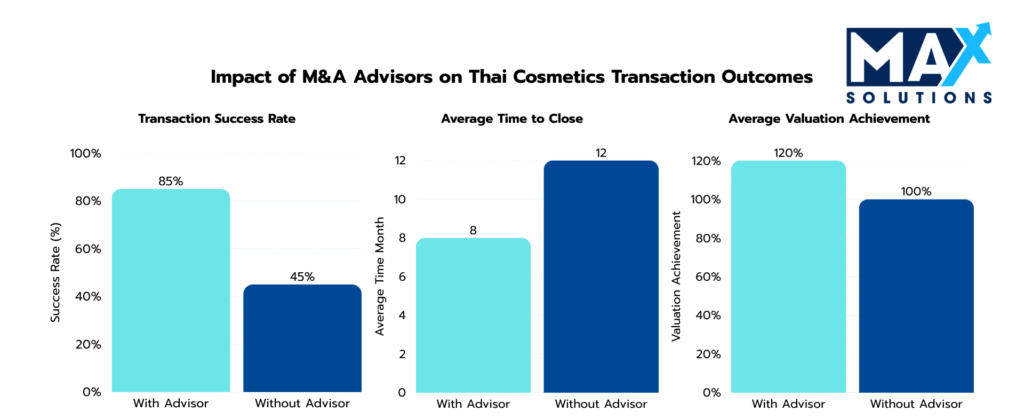
Figure 3: Impact of Using an M&A Advisor on Photography Studio Deal Outcomes
As illustrated in Figure 3, professional advisors deliver three core benefits:
• Higher success rates: Advisor-led transactions are twice as likely to complete successfully, primarily due to thorough preparation, qualified buyer screening, and proactive issue resolution
• Faster completions: Professional processes reduce time-to-close by approximately one fourth of the time, with the average advisor-led transaction completing in 8-9 months versus 12+ months for owner-led sales
• Superior valuations: Photography Studio Businesses sold through advisors achieve 10-30% higher valuations (average 20% premium), directly translating to millions of THB in additional proceeds for owners
Max Solutions differentiates through integrated service delivery combining M&A expertise with legal and accounting specialization through our partnership with Tanormsak Law Firm, bringing over 50 years of Thai business law experience to complex transactions.
This integrated model provides several advantages:
- Deep Thailand regulatory expertise navigating FBA, PDPA, and tax optimization
- Comprehensive buyer network spanning domestic and international acquirers
- Systematic deal structuring to maximize after-tax proceeds
- End-to-end transaction management from preparation through closing
Conclusion
The Thai photography studio M&A landscape in 2025 presents unprecedented opportunities for well-prepared owners seeking to monetize their businesses. Market fundamentals remain strong—digital transformation driving content demand, expanding e-commerce requiring professional imagery, and tourism recovery supporting destination photography. However, successfully capturing premium valuations in this environment demands sophisticated preparation, strategic positioning, and expert execution through the complex nine-month transaction process.
For photography studio owners, selling a business represents likely the largest financial transaction of their careers. The difference between an average outcome and an optimized exit can easily reach 30-50% of total proceeds, millions of baht that reward strategic preparation and expert guidance.
Max Solutions stands ready to guide studio owners through this complex journey. Our integrated advisory model combining M&A expertise, legal counsel via Tanormsak Law Firm, and accounting services provides the comprehensive support required for successful transactions. We understand the unique dynamics of Thailand’s photography sector, maintain active relationships with qualified buyers, and have demonstrated track records of delivering premium outcomes for creative services businesses.
Frequently Asked Questions (FAQs)
Q1: How long does the entire photography studio sale process typically take?
The structured six-stage process typically requires 9 months from preparation initiation to closing. However, sellers should begin financial cleanup and value enhancement 12-24 months before formal market entry. Total timeline from “decision to sell” to “funds in bank” is realistically 18-30 months for optimal outcomes. Rushed processes typically achieve 20-30% lower valuations and face dramatically higher failure rates.
Q2: What is my photography studio actually worth?
Valuation depends on multiple factors: size (revenue/EBITDA), location (Bangkok commands 15-20% premium over provincial), business model (recurring contracts vs. one-off projects), owner dependency (high dependency reduces value 20-30%), and growth trajectory. As rough guidance: Small studios (< THB 10M revenue): 2.0-3.5× EBITDA, Mid-sized (THB 10-50M): 3.0-4.5× EBITDA, Large studios (> THB 50M): 4.0-6.0× EBITDA. Precise valuation requires financial analysis and market comparables—Max Solutions provides complimentary preliminary assessments.
Q3: Should I structure the sale as shares or assets?
For Thai photography studios, share sales are strongly preferred from seller perspective. Individual sellers potentially pay no capital gains tax on share sales (exempt under Thai tax code for private companies), whereas asset sales trigger double taxation (20% corporate tax on gains + 10% dividend withholding to extract proceeds). However, foreign buyers sometimes require asset structures due to Foreign Business Act constraints. Professional advisors model both scenarios to optimize after-tax proceeds while accommodating buyer requirements.
Q4: How do I handle the Foreign Business Act restrictions with foreign buyers?
Three primary solutions: (1) BOI Promotion—obtain Board of Investment certification for “creative industry” or “digital services,” allowing 100% foreign ownership. This is Max Solutions’ preferred approach as it maximizes buyer pool and valuation. (2) Nominee Structure—foreign buyer takes 49% with Thai nominees holding 51% (legally complex and increasingly scrutinized). (3) Foreign Business License—buyer applies for FBL (time-consuming and uncertain approval). Studios should pursue BOI certification 6-12 months pre-sale if targeting foreign buyers.
Q5. How does Max Solutions’ integrated approach differ from traditional M&A advisors?
Our partnership with Tanormsak Law Firm provides seamless legal, tax, and transaction advisory services under one platform. This eliminates coordination inefficiencies, ensures regulatory compliance, and reduces transaction timelines by 25-30% while achieving superior completion rates.
References
- Asia-Pacific Photography Services Market Analysis: Mordor Intelligence. (2025). Photographic Services Market – Growth, Trends, and Forecasts. https://www.mordorintelligence.com/industry-reports/photographic-services-market
- Thailand Creative Economy Initiative: Korea Herald. (2025). Thailand pushes creative economy for next wave of growth. https://www.koreaherald.com/article/10620164
- PwC Thailand Entertainment & Media Outlook: PwC Thailand. (2025). Thai entertainment and media to surpass THB700bn in 2025. https://www.pwc.com/th/en/press-room/press-release/2025/press-release-15-08-25-en.html
- Thailand Department of Business Development: DBD. (2025). Business Registration Statistics Thailand. https://www.dbd.go.th
- Photography Studio Valuation Benchmarks: DealStream. (2025). Photography Studio Rules of Thumb and Valuation Multiples. https://dealstream.com/industry-guides/photography-studios/rules-of-thumb
- Thailand Foreign Business Act: Board of Investment Thailand. (1999). Foreign Business Act, BE 2542. https://www.boi.go.th/upload/Foreign%20Business%20Act_5dd766122ff27.pdf
- EBITDA Multiples by Industry: Equidam. (2025). EBITDA Multiples by Industry in 2025. https://www.equidam.com/ebitda-multiples-trbc-industries/
- Thailand PDPA Compliance: Siam Legal International. (2025). Personal Data Protection Act Thailand. https://www.siam-legal.com/legal-services/personal-data-protection-act-thailand/