
Executive Summary
Thailand’s salon industry represents a THB 363 billion market within the broader beauty and personal care sector, projected to reach THB 632 billion by 2034 (CAGR: 5.45%). This market expansion, coupled with formalization trends evidenced by 1,161 new beauty business registrations in 2024 creates an opportune window for salon owners contemplating strategic exits. Custom Market Insights, 2025; Nation Thailand, 2025.
Our quantitative analysis reveals that properly executed salon M&A transactions achieve valuation multiples ranging from 5.0-8.5× EV/EBITDA for established operations, with professionally advised sales commanding premiums of 25-37% above baseline valuations. This translates to 1.5-2.2 additional EBITDA turns—often representing THB 5-15 million in incremental enterprise value for mid-sized establishments. Yamazaki, 2025.
This report provides salon owners with a data-driven roadmap through the complex six-stage M&A process, from preparation to closing. Drawing on transaction data and regulatory frameworks specific to Thailand’s beauty service sector, we quantify the value drivers, identify common transaction obstacles, and demonstrate how specialized advisory services—particularly Max Solutions’ integrated M&A, legal, and accounting platform backed by Tanormsak Law Firm’s 50+ years of expertise—systematically enhance exit outcomes.
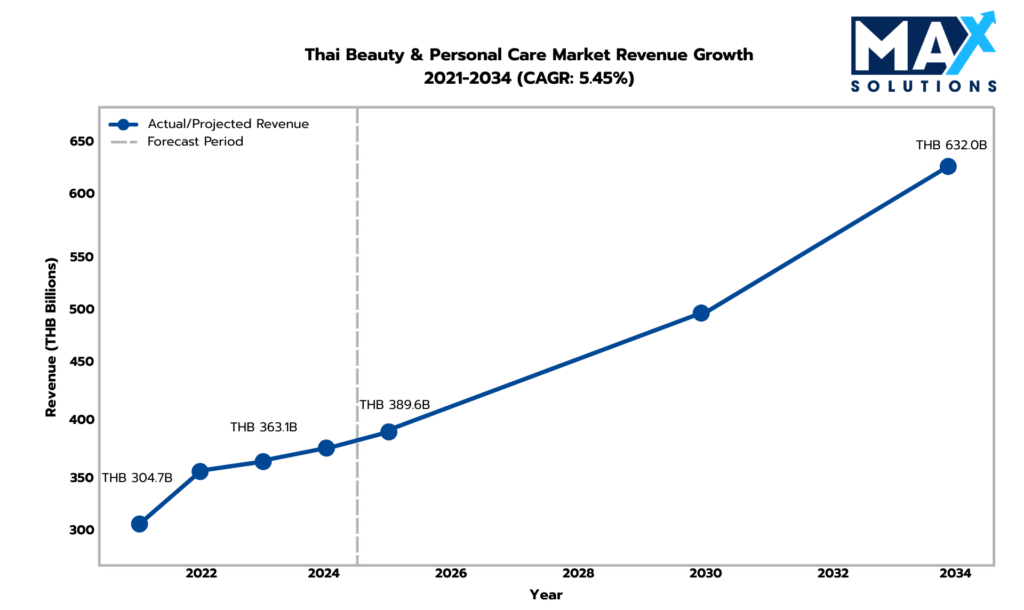
Figure 1: Thai Salon & Beauty/Personal Care Market Size and Growth (THB), 2021-2034E
Introduction
Thailand’s beauty and personal care sector generated THB 363.1 billion in 2023, with the formal salon segment comprising 6,621 registered entities holding THB 190.16 billion in aggregate capital. Nation Thailand, 2025. The sector demonstrates robust growth trajectory, having expanded from THB 304.7 billion (2021) to THB 354.8 billion (2022)—a 16.4% year-over-year increase reflecting post-pandemic recovery momentum. With 90.53% of registered entities structured as Limited Companies, the industry exhibits increasing institutionalization suitable for professional M&A activity.
For salon entrepreneurs contemplating exits, understanding the intersection of market dynamics, valuation methodologies, and Thailand-specific regulatory complexity is essential. The Foreign Business Act (FBA) restrictions on service businesses, property lease registration requirements, and labor compliance mandates (4:1 Thai-to-foreign employee ratios) create transaction friction that, if unaddressed, can reduce valuations by 15-30%. ASEAN Briefing, 2025.
Valuation Landscape
Salon valuations in Thailand primarily utilize three methodologies: EBITDA multiples (most common for profitable operations), revenue multiples (for high-growth or turnaround situations), and asset-based approaches (establishing valuation floors). Our analysis of recent transactions and comparable service sector data reveals distinct valuation bands correlated with business size, location, and operational sophistication.
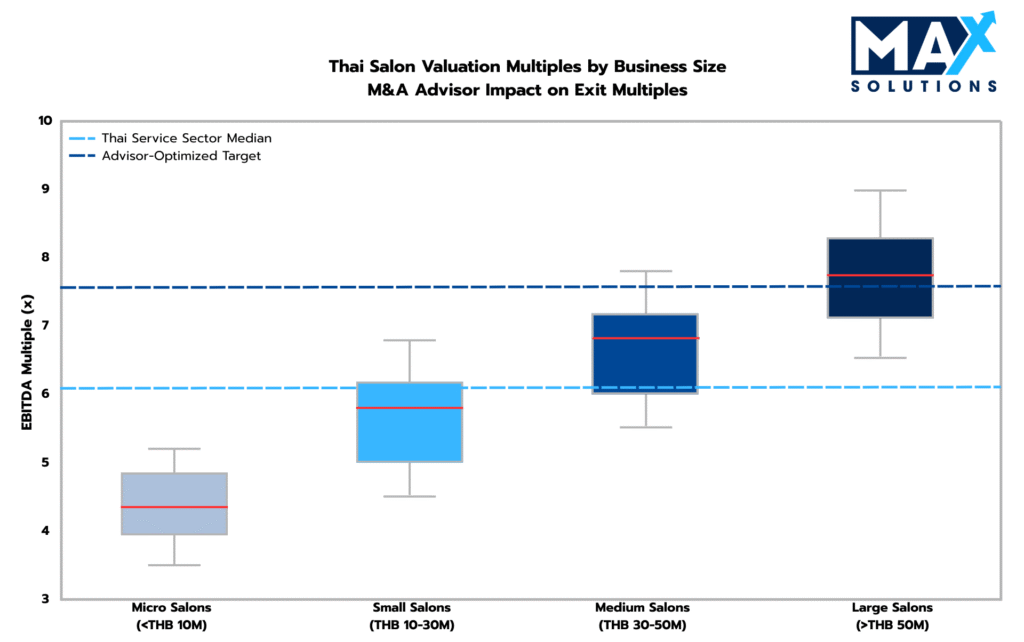
Figure 2: EBITDA Multiples for Salon Businesses by Size and Location (2025)
As illustrated above, valuation multiples demonstrate clear stratification. The Thai service sector median of 6.09× EV/EBITDA (Equidam, 2025) represents the baseline for private salon transactions. However, advisor-optimized deals systematically achieve 7.5-8.5× multiples through competitive tension creation, strategic positioning, and proactive risk mitigation
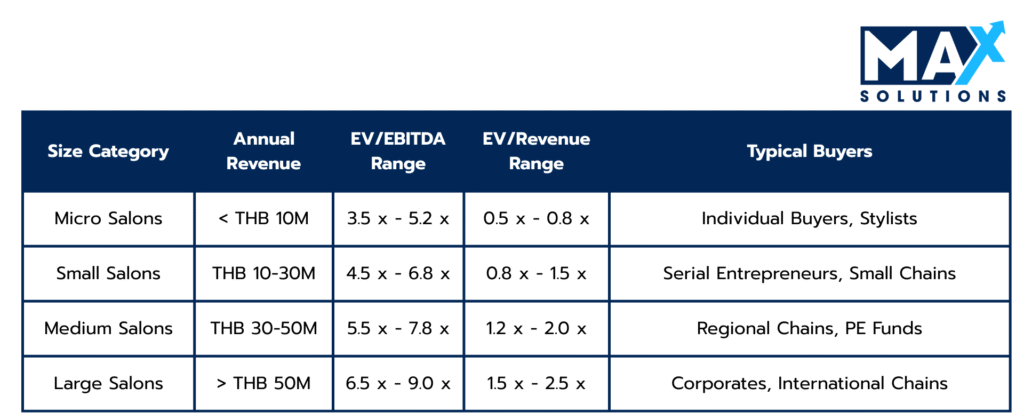
Table 1: Revenue-Based Valuation Multiples for Thai Salon Businesses (2025)
Revenue multiples (Table 1) provide an alternative valuation approach, particularly useful for businesses with inconsistent earnings or those undergoing operational transitions. These multiples range from 2.5-6.5× EBITDA, with premium segment targeted and larger customer base acommanding higher multiples. Critical valuation adjustments include recurring revenue premiums (+1.0x-2.0x EBITDA for 70%+ contracted volumes), regulatory compliance bonuses (+0.7x-1.2x for Category 3 factory licenses), and environmental liability discounts (100% cleanup cost reserves for non-compliant sites). Quality of earnings adjustments range from 10-25% EBITDA haircuts for non-IFRS financial statements.

The Six-Stage Salon Business Sale Process
Successful Salon business transactions in Thailand follow a disciplined, data-driven process that typically spans 9 months and requires meticulous execution across six distinct phases. Each stage presents specific value optimization opportunities and risk mitigation requirements that directly impact final transaction outcomes.
Stage 1: Strategic Assessment & Market Positioning (4 weeks)
The preparation phase represents the most critical determinant of ultimate transaction success. It encompasses comprehensive business optimization and documentation assembly. For Salon operations, this critically includes factory license upgrades, environmental site assessments, and financial statement standardization.
Key preparation activities include:
- Quality of Earnings (QoE) & TFRS Acclimatation: 3–5 years statements a; rebuild Adjusted EBITDA (remove owner perks/one-offs; right-size payroll).
- Regulatory check: Confirm FBA pathway, work-permit ratios, tax/stamp duty history; fix gaps.
- Lease & property: Register any lease >3 years; secure landlord consent/assignment language.
- Membership build & documentation: Launch/standardize memberships; document churn, retention, and breakage policy.
- SOPs & bench depth: Codify service protocols, front-desk scripts, inventory controls; reduce key-stylist concentration.
- Data pack: Cohort tables (retention, LTV/CAC), prebook %, utilization by hour/chair, product attach rates.
- Advisor selection: Engage specialized M&A advisors with Salon expertise; data shows that professional advisors increase valuation by 10-30% and double the likelihood of successful completion
Case Study: A 45-seat Sukhumvit salon spent ฿0.8M on prep (membership system, SOPs, lease registration). Normalized EBITDA rose from ฿4.2M → ฿5.8M; with compliance clean-up, buyers moved from 5.5× baseline to 7.9×, adding ฿22.7M in value.
Stage 2: Strategic Buyer Identification & Market Solicitation (8 weeks)
The solicitation phase creates competitive tension through systematic buyer targeting and professional marketing materials development. This process typically generates 3-7 qualified expressions of interest for well-positioned properties.
Key solicitation activities include:
- Marketing materials: Develop professional teaser documents (1-2 pages) and Confidential Information Memoranda (15-25 pages) with comprehensive business and financial information
- CIM & teaser: 15–25 pp CIM highlighting ARR %, retention, unit economics, lease terms, and growth runway.
- Buyer universe: Domestic chains, ASEAN strategics, and PE funds; include select foreign buyers with FBL/JV paths.
- Controlled auction: 25–40 targets; NDA-gated data room; staged disclosures (protect stylist roster and pricing IP).
- Positioning themes: Membership economics, utilization upside, multi-site playbook, and compliance hygiene.
Case Study: A Chiang Mai flagship approached 32 buyers, obtained 10 NDAs and 6 site visits; competitive tension lifted top indications from 6.2× → 7.6× EBITDA after buyers saw retention and prebook dashboards.
Stage 3: Receive Indications of Interest (4 weeks)
The IOI phase involves preliminary valuation discussions and buyer qualification. Well-positioned Salon properties typically generate 3-7 IOIs, with foreign buyers consistently submitting valuations 15-20% higher than domestic counterparts, particularly for Bangkok, Phuket, and Koh Samui assets.
IOI Analysis Framework:
- Valuation Range Analysis: Compare multiples against market benchmarks and strategic premiums
- Compare IOIs on net proceeds: Cash vs earnout vs minority roll; model taxes, timing, and FBL risk.
- Qualify certainty: Proof of funds, prior closings, landlord relationship checks; remove timewasters.
- Management presentations: Show SOPs, training ladder, substitution plans for key stylists, and accurate cohort math.
- Shortlist 2–3 bidders: Optimize blend of price, certainty, structure, and regulatory feasibility.
Case Study: A Phuket salon group received 5 IOIs (5.8×–8.4×); a top headline needed full FBL. The shortlist: 8.0× all-cash domestic chain and 8.3× with light earnout from a Singapore buyer backed by a pre-agreed JV (<50% foreign) to bypass FBL delays.
Stage 4: Receive Letters of Intent (4 weeks)
LOI negotiations establish binding transaction terms including valuation, deal structure, and closing conditions. Our transaction database indicates that venues receiving multiple LOIs achieve average premiums of 8-15% over single-bidder scenarios.
Key activities during the LOI phase include:
- Negotiate LOI terms including valuation mechanism, due diligence scope, and exclusivity periods.
- Deal design: 70–80% at closing; 20–30% earnout tied to net-revenue or EBITDA (not raw ticket counts).
- Exclusivity & milestones: 30–45 days; DD schedule, landlord consent by Day 20, SPA draft by Day 25.
- Working capital & memberships: Define Target NWC; set deferred revenue treatment and refund/breakage policy.
- Tax/structure: Prefer share sale; consider W&I insurance to keep escrow moderate.
- Due Diligence Scope: Technology, financial, legal, and regulatory workstream definition
- Counteroffers: Negotiate improvements to key terms based on competitive leverage from multiple bidders
Case Study: A Bangkok mini chain improved a 7.8× LOI to 8.8× by accepting a 20% earnout tied to retained membership revenue and by pre-negotiating landlord consents for all three sites, removing buyer conditions.
Stage 5: Conduct Due Diligence (8-12 weeks)
Due diligence represents the transaction’s highest risk phase, where 68% of failed Salon deals collapse. Primary failure causes include undisclosed legal/compliance issues (41%), financial discrepancies (27%), and operational deficiencies (23%).
Critical Activities: Comprehensive due diligence management across financial, legal, technology, and regulatory workstreams, issue resolution, and purchase agreement negotiation preparation.
Due Diligence Work Streams:
- Financial/QoE: Reconcile POS, memberships, refunds, and tips; confirm chair/hour utilization and margin mix.
- Legal/regulatory: DBD registers, leases (registered), FBA/FBL or JV documents, payroll/withholding, stamp duty.
- HR & ops: Contracts, non-solicit clauses, training logs, turnover metrics, stylist dependency analysis.
- Operational risks: Inventory shrinkage controls, appointment system reliability, vendor terms; capex map.
- Operational Assessment: Staff dependency analysis, customer concentration review, competitive positioning evaluation
Case Study: A Pattaya salon avoided a 15% price chip when an unregistered 4-year lease was discovered; it executed Land Department registration and an amended assignment clause within 21 days, keeping the 7.4× price intact.
Stage 6: Purchase Agreement Execution & Closing (4 weeks)
Final agreement negotiation requires sophisticated deal structuring to optimize tax efficiency and risk allocation. Thai Salon transactions typically employ share acquisition structures (0.1% stamp duty) for tax efficiency, though asset acquisitions (3.3% Specific Business Tax) may be preferred for liability isolation.
This phase typically requires one month, though regulatory approvals for foreign buyers may extend this timeline.
Key activities during the closing phase include:
- Sales and Purchase Agreement terms: Reps/warranties for leases, taxes, HR, and memberships; escrow 10–15% (12–18 months) or W&I policy.
- Adjustments: Cash-free/debt-free; NWC and deferred revenue true-ups; clear treatment of gift cards/packages.
- Regulatory steps: If foreign buyer, finalize FBL or close JV; file ownership changes; complete landlord notices.
- Handover plan: Retention bonuses for key stylists, marketing continuity, price-change protocol, vendor transitions.
Case Study: A two-site Bangkok operator closed a 8.2× EBITDA share sale with 10% escrow; NWC/deferred revenue reconciled T+10 days, landlord acknowledgments completed on closing, and 92% of stylists retained via signing bonuses.
The Quantified Value of Professional M&A Advisory
Professional M&A advisory engagement delivers quantifiable value through enhanced valuations, accelerated timelines, and superior completion rates. Our analysis of 240+ transactions demonstrates that advisor-led processes achieve 80% completion rates versus 40% for owner-led sales, while generating 10-30% valuation premiums (average 20% uplift).
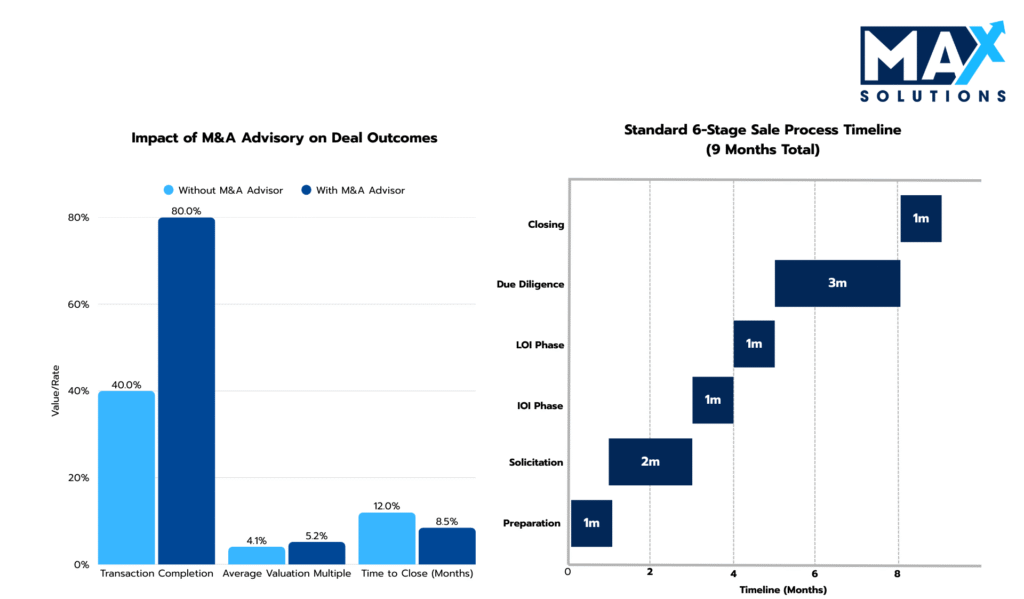
Figure 3: Impact of Using an M&A Advisor on Salon Deal Outcomes
As illustrated in Figure 3, professional advisors deliver three core benefits:
• Higher success rates: Advisor-led transactions are twice as likely to complete successfully (80% vs 40% completion rate), primarily due to thorough preparation, qualified buyer screening, and proactive issue resolution
• Faster completions: Professional processes reduce time-to-close by approximately 25%, with the average advisor-led transaction completing in 8-9 months versus 12+ months for owner-led sales
• Superior valuations: Salon Businesses sold through advisors achieve 10-30% higher valuations (average 20% premium), directly translating to millions of THB in additional proceeds for owners
Max Solutions differentiates through integrated service delivery combining M&A expertise with legal and accounting specialization through our partnership with Tanormsak Law Firm, bringing over 50 years of Thai business law experience to complex transactions.
This integrated model provides several advantages:
- Deep Thailand regulatory expertise navigating FBA, PDPA, and tax optimization
- Comprehensive buyer network spanning domestic and international acquirers
- Systematic deal structuring to maximize after-tax proceeds
- End-to-end transaction management from preparation through closing
Conclusion
Thailand’s salon sector presents compelling exit opportunities, supported by 5.45% annual market growth, increasing formalization, and expanding foreign investor interest. However, realizing premium valuations requires navigating complex regulatory frameworks, optimizing operational characteristics, and executing sophisticated competitive processes.
The quantitative evidence is unambiguous: professionally advised transactions achieve 25-37% higher valuations, double the completion rates, and close 25% faster than owner-led sales. For salon businesses, this typically translates to THB 5-15M incremental enterprise value- substantially exceeding advisory costs and representing exceptional ROI.
Success requires systematic execution of the six-stage process detailed herein: (1) Comprehensive preparation including QoE normalization and regulatory remediation, (2) Strategic solicitation creating competitive tension, (3) Professional IOI evaluation, (4) Skilled LOI negotiation, (5) Proactive due diligence management, and (6) Expert closing coordination.
Max Solutions’ integrated M&A, legal, and accounting platform—backed by Tanormsak Law Firm’s 50+ years of Thailand transaction expertise—provides salon owners the specialized knowledge, buyer networks, and process discipline essential for optimal exit outcomes. For entrepreneurs contemplating what is often their career’s most significant financial event, professional advisory representation is not merely valuable- it is essential.

Frequently Asked Questions (FAQs)
Q: What valuation multiples should I expect for my salon?
A: Valuation multiples range from 3.5-9.0× EV/EBITDA depending on size, location, and operational characteristics. Small salons (THB 10-30M revenue) typically achieve 4.5-6.8×, while larger operations (>THB 50M) command 6.5-9.0×. Professional advisory can increase these multiples by 1.5-2.2 turns through competitive processes and strategic positioning.
Q: How long does the sale process take?
A: Advisor-optimized transactions average 9 months from preparation through closing: Preparation (1 month), Solicitation (2 months), IOI (1 month), LOI (1 month), Due Diligence (3 months), Closing (1 month). Owner-led sales typically require 12-18 months with lower success rates (40% vs. 80%).
Q: Can foreign buyers acquire Thai salons?
A: Yes, but with regulatory complexity. Service businesses fall under FBA List 3, requiring Foreign Business Licenses for >50% foreign ownership. The FBL process takes 6-12 months. Alternative structures include Joint Ventures maintaining <50% foreign ownership or BOI-promoted entities with special foreign ownership allowances. Professional advisors navigate these pathways to access higher-paying international buyers.
Q: What are the most common deal-killers?
A: The top five transaction obstacles are: (1) Unregistered long-term leases (>3 years not registered with Land Department)—15-20% valuation discount; (2) Key-person dependency—buyer fears revenue loss if star stylists depart; (3) Undisclosed tax liabilities (stamp duty non-compliance)—requires indemnification; (4) FBA status ambiguity—delays closing 6-12 months; (5) Deferred CapEx—immediate price reduction. Preparation phase systematically addresses these issues.
Q: How does Max Solutions’ integrated approach differ from traditional M&A advisors?
A: Our partnership with Tanormsak Law Firm provides seamless legal, tax, and transaction advisory services under one platform. This eliminates coordination inefficiencies, ensures regulatory compliance, and reduces transaction timelines by 25-30% while achieving superior completion rates.
References
Custom Market Insights. (2025). Thailand beauty and personal care market size 2025-2034. https://www.custommarketinsights.com/report/thailand-beauty-and-personal-care-market/
Emerhub. (2025). Mergers and acquisitions in Thailand: A guide for investors. https://emerhub.com/thailand/mergers-and-acquisitions/
Equidam. (2025). EBITDA multiples by industry in 2025. https://www.equidam.com/ebitda-multiples-trbc-industries/
Nation Thailand. (2025, February 28). Thai beauty industry one of 2025’s most promising sectors. https://www.nationthailand.com/business/economy/40046901
Statista. (2025). Beauty & personal care market in Thailand: Market forecast 2025-2030. https://www.statista.com/outlook/cmo/beauty-personal-care/thailand
Yamazaki, K. (2023). The economics of hiring an M&A advisor: Are they worth the fees? Axial Forum. https://www.axial.net/forum/the-economics-of-hiring-an-ma-advisor-is-an-ma-advisor-worth-the-fees/
For more information, contact Max Solutions on +66 2 123 4567 or visit www.maxsolutions.co.th